
Living with unrelenting back or neck pain can make your world feel incredibly small. Simple, everyday moments like walking around the historic Ellis County Courthouse, driving down Highway 77, or sitting down for a family meal shouldn’t feel like a physical test of endurance. If conservative treatments haven’t given you the results you need, you might find yourself exploring the possibilities of minimally invasive spine surgery to permanently resolve your structural issues.
At SCC Waxahachie, our primary clinical mission is to provide non-surgical pathways that help you achieve lasting back pain relief. However, when structural or nerve damage means an operation is the most practical step forward, understanding how modern techniques minimize trauma can help remove the fear from your recovery journey.
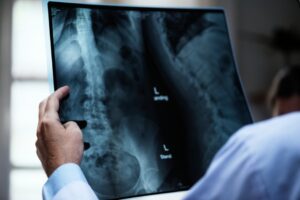
What is Minimally Invasive Spine Surgery?
Traditional back operations often require long, deep incisions that slice through the large stabilizing muscles of your back. This extensive muscle disruption is often the primary cause of prolonged post-operative discomfort and extended hospital stays.
In contrast, spine surgery minimally invasive techniques change this approach entirely. Using specialized instruments, tiny cameras, and tubular retractors, surgeons can access your vertebrae through incisions often no larger than a postage stamp. Instead of cutting through vital muscle groups, these modern tools gently tunnel between the muscle fibers, preserving the structural integrity of your back.
Targeting the Neck: Minimally Invasive Cervical Spine Surgery
When severe disc herniations or bone spurs occur in the neck, they can compress vital nerves, causing pain to radiate down into your shoulders and arms. To resolve this without major muscle damage, specialized minimally invasive cervical spine surgery can relieve pressure on your cervical nerves through a small opening in either the front or the back of the neck. This focused precision means less neck stiffness and a much quicker return to smooth, natural head movement.
What to Expect During Minimally Invasive Spine Surgery Recovery
One of the most significant advantages of choosing a specialized, modern approach over traditional open surgery is the streamlined timeline for healing. Because the structural back muscles are spared from severe trauma, minimally invasive spine surgery recovery is typically faster, less painful, and associated with fewer wound complications.
“Preserving the surrounding muscles during a procedure means your body can focus its vital energy directly on bone and nerve healing, rather than repairing extensive soft tissue cuts.”
Many patients are up and walking within a few hours of their procedure, and many operations can be performed on an outpatient basis. While complete bone or tissue remodeling still requires several months, you can generally return to light daily activities far sooner than you would following standard open surgery.
Comparing Options: Non-Surgical Wellness vs. Surgical Care
Navigating your health choices requires balancing immediate symptom relief with long-term functional strength. The table below outlines how conservative therapy options compare to surgical paths:
| Care Type | Primary Focus | Best For | Typical Recovery Window |
| Conservative Physical Medicine | Structural alignment and core muscle balancing | Herniated discs, sciatica, postural fatigue, joint stiffness | No downtime; continuous functional strength building |
| Minimally Invasive Surgery | Target nerve decompression and bone stabilization | Progressive nerve compression, unstable joints, severe disc damage | 2 to 6 weeks for a return to light, daily routines |
| Traditional Open Surgery | Complex multi-level structural reconstruction | Severe spinal trauma, major deformities, extensive masses | 3 to 12 months of intensive healing and physical rest |
The Essential Role of Therapy Before and After a Procedure
Whether you are trying everything possible to avoid the operating room or want to secure the best possible results following a procedure, working with a dedicated wellness clinic is essential for your long-term joint health.
The Benefits of Physical Therapy in Waxahachie
Muscles can weaken and stiffen quickly after periods of chronic pain or post-operative rest. Participating in structured physical therapy Waxahachie helps you rebuild your core stability safely, ensuring your spine has a strong, muscular foundation to protect it from future strain.
Proactive Chiropractic Care
If you are looking for alternatives to surgery, precise spinal adjustment protocols can relieve pressure on pinched nerves and restore proper mechanical movement to your joints. For those who have already undergone an operation, gentle, non-force chiropractic care can keep the joints around the surgical site healthy and moving smoothly.
Practical Home Tips for Supporting Your Spinal Health
Small adjustments to your daily mechanics can play a massive role in protecting your back from unnecessary stress:
- Avoid Long, Continuous Sitting: Prolonged sitting places intense pressure on your lower lumbar discs. Set a timer to stand up, stretch, or take a brief walk every forty-five minutes.
- Use the Log-Roll Technique: Protect your spine when getting out of bed by rolling completely onto your side first, then using your arms to push your torso upward as your legs swing down.
- Optimize Your Screen Height: Keep your phone and computer monitors at eye level to prevent “text neck,” which places immense, continuous strain on your cervical spine.
- Prioritize Hydration: Your spinal discs rely heavily on water to remain plump and act as effective shock absorbers. Drink plenty of water throughout the day.
Frequently Asked Questions
1. How do I know if I need to find minimally invasive spine surgery near me?
If you are dealing with chronic leg or arm pain caused by nerve compression, and conservative care like physical therapy or injections has failed to provide relief after six to twelve weeks, it may be time to consult a local specialist to see if you are a candidate for a focused, small-incision procedure.
2. Is minimally invasive spine surgery safer than traditional open surgery?
Yes, for qualifying candidates. Because these modern procedures use significantly smaller incisions and do not slice through the large back muscles, they are generally associated with lower rates of blood loss, reduced risk of post-op infection, and a faster overall healing process.
3. Can all types of spinal conditions be treated with small-incision surgery?
While a vast majority of common issues—including single-level herniated discs, spinal stenosis, and minor bone spurs—are perfect for these techniques, highly complex conditions like severe scoliosis, large spinal masses, or multi-level spinal trauma may still require a traditional open approach.
4. When can I return to work during my surgery recovery?
Your return-to-work timeline depends heavily on the physical demands of your job. Patients with sedentary desk jobs can often return within one to two weeks, while those whose occupations require heavy lifting or intense physical labor may need to wait six weeks or longer.
5. Why shouldn’t I look for options like minimally invasive spine surgery nj if I live in Texas?
Seeking complex spinal care far away from home, such as out-of-state options like minimally invasive spine surgery nj, adds significant travel stress and logistical complications. Choosing an expert team close to home in Ellis County ensures easy access to vital post-operative checkups, timely emergency care, and continuous, stress-free physical therapy.
Take control of Your Spinal Health Today
Persistent back or neck pain should not keep you from living your life to the fullest. Whether you are searching for advanced alternatives to avoid an operation or need a comprehensive rehabilitation plan to guide you through your recovery, our experienced local team is here to walk with you every step of the way.
Visit our specialized injury management and rehabilitation hub to learn how our advanced clinical treatments can restore your mobility. Our experienced injury management specialists provide comprehensive evaluation and advanced treatment options for injury management and other spinal conditions.
If you are dealing with deep, chronic nerve discomfort, visit our interventional pain management center for pain management to discover how we can help safely interrupt persistent pain signals.
Don’t wait for your symptoms to impact your long-term mobility. Contact us at 972-937-8900 and schedule your consultation today to receive personalized thoracic spine injury treatment and start your journey toward pain relief and recovery.